Executive Summary
1,152 words · 4 min read
- Key figures: 78%
- The Plain-English Definition: This is the process by which a financial institution, known as the acquiring bank or acquirer, handles and settles credit and debit card transactions on behalf of a merchant.
- Why Finance Professionals Are Paying Attention: In an era where payment certainty is rapidly becoming the new fraud strategy, finance professionals are forced to look beyond mere transaction processing to the underlying infrastructure.
- The Landscape: The merchant acquiring space is heavily regulated, primarily by card network rules (e.g., Visa, Mastercard) and financial supervisory bodies.
In an increasingly real-time and globally interconnected payment landscape, understanding the intricate plumbing behind every card swipe – specifically, the role of merchant acquiring payments – is no longer optional for finance professionals, but a critical component of risk management and strategic growth.
Key Takeaways
- Fintech education, particularly around core payment mechanisms, is critical amid evolving fraud risks and new real-time payment platforms.
- For CFOs and institutional investors, a deep dive into merchant acquiring illuminates both operational efficiencies and potential vulnerabilities in payment flows.
- The shift towards real-time corporate payments and advanced fraud detection strategies creates new opportunities for agile fintechs and traditional players willing to adapt.
- Prioritise robust data-sharing frameworks for fraud mitigation and evaluate partners based on their capacity for instant, secure payment processing.
The Plain-English Definition
This is the process by which a financial institution, known as the acquiring bank or acquirer, handles and settles credit and debit card transactions on behalf of a merchant. Essentially, it’s the invisible bridge that moves money from a customer’s bank account to a business’s bank account after a sale.

How It Works — Step by Step
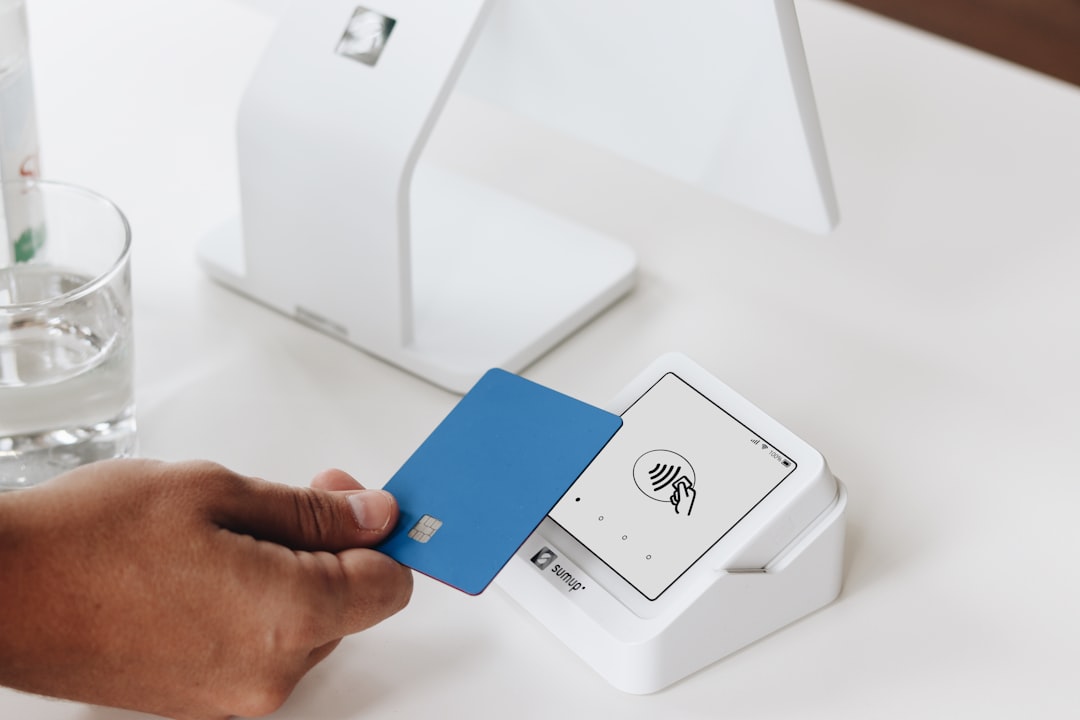
- Initiation — A customer uses their credit or debit card at a merchant’s point-of-sale (POS) terminal or e-commerce checkout.
- Authorisation Request — The merchant’s POS system sends the transaction details to the acquiring bank, which then forwards it to the relevant card network (e.g., Visa, Mastercard).
- Issuing Bank Approval — The card network directs the request to the customer’s issuing bank, which verifies funds/credit and approves or declines the transaction.
- Authorisation Response — The approval or decline is sent back through the card network to the acquiring bank, and then to the merchant’s POS, completing the sale.
- Settlement & Funding — At the end of the day, the acquiring bank collects all authorised transactions, batches them, and requests funds from the issuing banks via the card networks, eventually depositing the net amount into the merchant’s account.

A Real-World Example
Consider a small business in Europe, say a boutique clothing store, that starts selling online to customers globally. They partner with an acquirer like Thredd, who, through an alliance with a French FinTech like ID Distribution (IDD), enables them to accept cards from customers worldwide. When a customer in Asia buys a dress for $150, Thredd, acting as the acquiring bank for the merchant, processes that transaction from the customer’s international bank via the card networks, ensuring the $150 (minus fees) reaches the boutique’s bank account smoothly, despite the geographical distance and different currencies.
Why Finance Professionals Are Paying Attention
In an era where payment certainty is rapidly becoming the new fraud strategy, finance professionals are forced to look beyond mere transaction processing to the underlying infrastructure. The traditional B2B fraud prevention model, which assumed ample time to correct errors, is now obsolete in the face of real-time corporate payment networks. Understanding the nuances of merchant acquiring payments isn’t just about knowing how money moves; it’s about identifying where friction points, fraud vectors, and opportunities for efficiency gains lie.
For CFOs, this knowledge directly impacts cash flow management, risk exposure, and ultimately, the bottom line. Institutional investors, on the other hand, scrutinise the health and innovation within the acquiring space as a bellwether for the broader fintech market. The recent $50 million Series C raise by instant payments platform Interchecks, for instance, signals strong investor confidence in technologies that streamline and secure payment flows. Those who grasp the intricate dance between acquirers, issuers, and merchants are better positioned to evaluate strategic partnerships, mitigate emerging risks like those highlighted at EBAday 2026 (where 78% considered data sharing key to fraud mitigation), and ultimately, drive value.
Of payments and transaction banking executives consider data sharing most effective for fraud risk mitigation.
Common Misconceptions
- Myth: All payment processors are acquirers. Reality: Many payment processors simply provide the technology layer; true acquirers are licensed financial institutions that actually settle transactions and take on financial risk.
- Myth: Merchant acquiring is only relevant for large retailers. Reality: Any business that accepts card payments, from the smallest SMB to the largest enterprise, relies on a merchant acquirer to process those transactions.
- Myth: All fees associated with card payments go to the acquirer. Reality: Acquirers charge a portion, but significant interchange fees go to the issuing bank, and assessment fees go to the card networks.
The Landscape
Key Players
- Thredd: An issuer processing platform extending alliances for corporate payments, illustrating the foundational technology behind acquiring.
- ID Distribution (IDD): A French FinTech expanding offerings like Vaziva, demonstrating the diverse services built upon acquiring infrastructure.
- Interchecks: An instant payments platform that recently raised $50 million, highlighting innovation in faster settlement and B2B payment flows.
- Bettor Capital, Commerce Ventures, Decades Holdings, Thayer Street Partners: Venture capital firms investing in payment platforms, underscoring investor interest in the underlying payment ecosystem.
Regulation and Standards
The merchant acquiring space is heavily regulated, primarily by card network rules (e.g., Visa, Mastercard) and financial supervisory bodies. Adherence to standards like PCI DSS (Payment Card Industry Data Security Standard) is mandatory to protect sensitive cardholder data. Furthermore, evolving anti-money laundering (AML) and counter-terrorist financing (CTF) regulations, alongside directives like those from EBAday on fraud prevention, continually shape how acquirers operate, pushing for greater data sharing and more robust real-time security measures to manage systemic risk across borders.
The Bottom Line
Understanding the complexities of merchant acquiring payments is no longer a niche concern, but a strategic imperative. As cross-border trade grows, and real-time payment networks demand “payment certainty,” finance professionals must grasp the mechanics, risks, and innovations in this foundational payment pillar. The ability to navigate these dynamics – from fraud mitigation to optimising settlement – directly impacts financial stability and competitive advantage in a world where every transaction is under the microscope.
Frequently Asked Questions
What is the primary difference between an acquirer and an issuer?
An acquirer processes transactions for merchants, depositing funds into their accounts. An issuer is the bank that provides the credit or debit card to the consumer, authorising or declining transactions based on the cardholder’s account status. They represent opposite ends of the payment flow.
How does fraud prevention in merchant acquiring differ in real-time payments?
In real-time payments, the window for intervention post-transaction shrinks dramatically. Fraud prevention shifts from detection and reversal to proactive, instantaneous verification and risk scoring at the point of sale, demanding advanced data analytics and immediate decision-making to prevent losses.
Why are Dollar Payments still dominant for SMB cross-border trade?
Despite the global nature of supply chains, the US dollar remains the de facto reserve currency, offering stability and broad acceptance. Many international suppliers and vendors prefer settlement in dollars, simplifying pricing and reducing currency conversion risks for small and medium-sized businesses.